Roxanne Lowit, 1942 to 2022, was one of the great visual chroniclers of fashion, art and nightlife at the end of the twentieth century. For more than four decades she photographed the people who shaped these worlds from extraordinarily close range. Yves Saint Laurent, Salvador Dalí, David Bowie, Elizabeth Taylor, Karl Lagerfeld, Naomi Campbell, Kate Moss and Elton John all passed before her lens. Yet the lasting fascination of her work lies not simply in who she photographed, but in how she saw them.

“Elton John Live at Central Park, New York, 1980” by ROXANNE LOWIT
Lowit trained in textile design in New York and came to photography almost instinctively. In the late 1970s she began taking a camera to the fashion shows, where she quickly realised that the real theatre often happened away from the runway. Backstage, at dinners, in hotel rooms and at parties, she found something more revealing than the polished public image. Over time, these spaces became her territory and helped establish the candid backstage photograph as a visual language in its own right.

“Smoke gets in your Eyes” by ROXANNE LOWIT

“Potassa de la Fayette and Salvador Dali NYC New Year’s Eve, 1979” by ROXANNE LOWIT
What distinguished Lowit was access, but also trust. Her subjects rarely appear to be performing for the camera. They are laughing, waiting, dressing, smoking, talking, flirting, celebrating. The photographs feel spontaneous, but they are not careless. A hand, a glance, a figure caught at the edge of the frame can completely change the atmosphere of an image. Lowit understood that glamour is often most compelling in the moment when it stops trying to be glamorous.
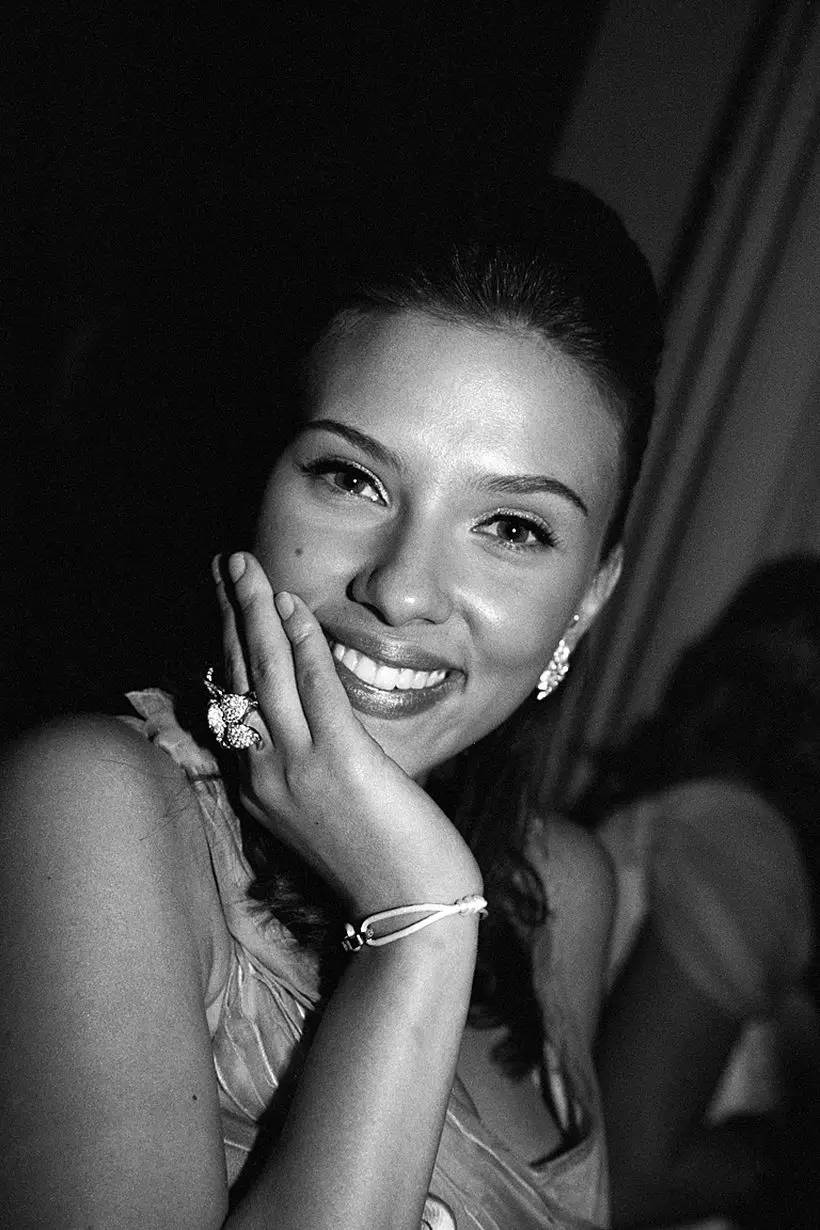
“Scarlett Johansson” by ROXANNE LOWIT
Seen today, her photographs feel remarkably contemporary. The fascination with private moments, backstage access and the lives behind public personas has become part of everyday visual culture. Lowit was exploring this territory decades before social media made it familiar. The difference is that her access was not digital or distant. She was physically present, invited into rooms and relationships that were closed to most people. She did not simply photograph the inner circle. She lived within it.
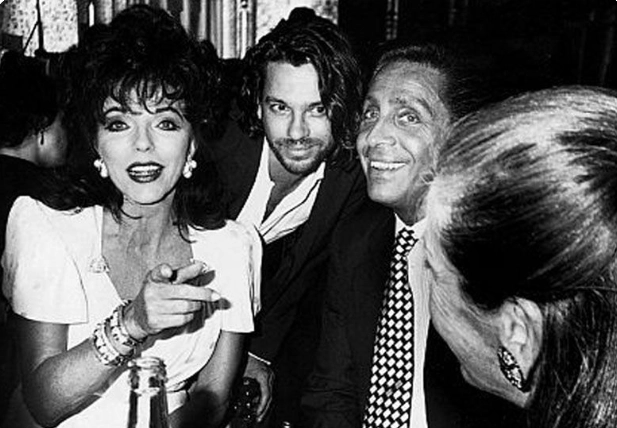
“Joan Collins, Michael and Valentino” by ROXANNE LOWIT
This is exactly what gives these works their particular richness. They are immediately seductive images, but they are also documents of a cultural moment. Fashion, contemporary art, music, cinema and nightlife overlap within the same frame. The subject may be famous, but the photograph is ultimately about something larger: an era, an atmosphere and a way of living that has largely disappeared.

“Sophie Dahl at Ritz” by ROXANNE LOWIT
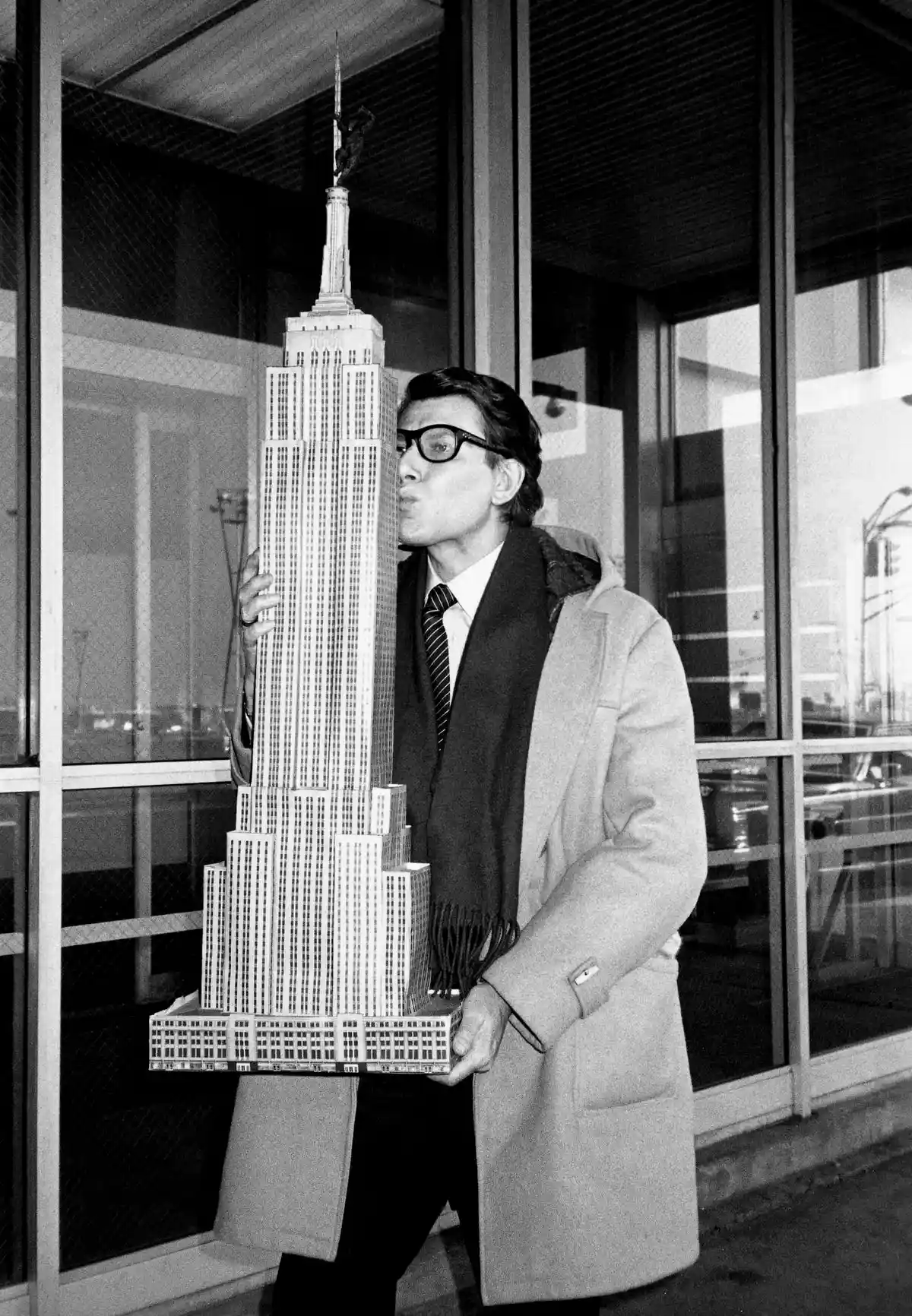
“Yves Saint Laurent, NY 1983” by ROXANNE LOWIT
For collectors, this gives Lowit an unusual position. Her photographs are accessible without being obvious. They can be enjoyed simply for their wit, beauty and extraordinary subjects, while a more experienced eye can appreciate their place within the history of fashion photography and candid portraiture. Her work has become part of the visual record of an extraordinary period, while still retaining the intimacy of something personal. That combination of cultural recognition and genuine photographic authorship is precisely what allows certain images to move beyond celebrity photography and into serious collecting.

“Nadja Auermann for Vivienne Westwood, 1995” by ROXANNE LOWIT
The works currently presented by the gallery are limited-edition fine art photographs personally signed by Roxanne Lowit during her lifetime, giving them an added rarity and direct connection to the artist that can never be replicated after her death in 2022. While edition, size, condition and provenance remain key considerations, lifetime-signed examples carry a particular significance as Lowit’s market and historical reputation continue to develop. Her secondary market remains selective, with the strongest prices generally achieved by iconic subjects, desirable editions and larger formats, yet it has not reached the saturation of some major twentieth-century photographers. For collectors, this offers a compelling combination of established historical importance, instantly recognisable imagery and continued potential for discovery: to own a lifetime-signed Roxanne Lowit is to own not only an image of an icon, but a fragment of the world in which those icons became iconic.

“Face On, Face Off_Backstage at Christian Dior, Ready to Wear 2003” by ROXANNE LOWIT